


Chaparral Larrea tridentata
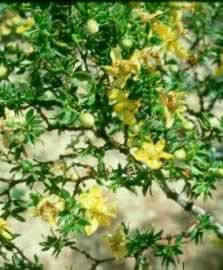
- Common Names
- Chaparral , hediondilla, Shegoi
- Botanical Name
- Larrea tridentata
- Family
- ZYGOPHYLLACEAE

Medicinal Uses & Benefits of Chaparral
 How to Use|
Side Effects |
Plant & Garden|
How to Use|
Side Effects |
Plant & Garden|
- Medicinal Uses: * Burns
* Eczema
* Parasites/worms
* Psoriasis
* Sunburns
- Properties: * Antibacterial * Antifungal * Antiparasite * emetic
- Parts Used: Leaves, flowers and fruit
How to Use: Chaparral
Chaparral has potent and long-lasting anti-inflammatory and analgesic effects in the treatment of rheumatoid arthritis. Chaparel is one of the medicinal plants of the Southwest,(along with osha Ligusticum porteri and jojoba Simmondsia chinensis) with a long history of medicinal use. Chaparral herb should only be used externally in baths, and the tincture can be used to make creams and lotions. Applied to the skin, chaparral can have a remarkable healing effect on the skin.It is useful for eczema, psoriasis, and as an excellent antiseptic dressing for cuts, sores and bruises. 1
Preparation Methods & Dosage :A plant of the desert, chaparral is poorly soluble in water, therefore decoctions and alcohol based tinctures are used to make salves and lotions.
Chaparral Remedies
Chaparral Side Effects: FOR EXTERNAL USE ONLY!! Reports of serious liver disease have been associated with the ingestion of chaparral. These reports generally involved persons taking large dosages in the form of capsules. Contraindications include pregnancy, lactation, and for use by children1
Plant Description
- Plant Class:Low-desert dwarf shrub. Extracts from this plant are used as a preservative for lumber. When it rains it exudes a resin that smells like creosote, in Mexico it is called hediondilla, which translates as "little stinker'
- Leaves:Tiny, dark-green leaves are used in herbal medicine
- Distribution:Southwestern desert regions of the United States and Mexico.
Regional Traditions :North America *
History and Traditions & Folklore
Chaparral is one the oldest living inhabitants of our planet, and has a long history of use. The American Indians of the Southwest have used this plant for centuries - for everything from the internal treatment of tumors and liver diseases to topical skin treatments, including sunscreen for themselves and their animals.The major traditional use of chaparral in Mexican herbalism is as a bath or liniment to relieve the inflammation and pain of arthritis, sometimes in combination with osha. Works Cited
- Yarnell, Eric. Misunderstood "Toxic Herbs" Alternative & Compementary Therapies. February 1999.:6-11. American Botanical Council
Looking for Aroma Therapy? Visit Annies Aroma Therapy
Looking for something you can read offline? Join our mailing list and get a free copy of Methods for Using Herbs. This free handbook includes instructions on how to make basic herbal preparations at home. It covers making herbal teas, herb infused oils and balms, tinctures, and more.