


Rehmannia Rehmannia glutinosa
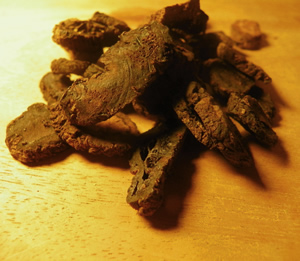
Dried rehmannia root
- Common Names
- Rehmannia root , Chinese Foxglove, Shu Di Huang
- Botanical Name
- Rehmannia glutinosa
- Family
- SCROPHULARIACEAE

Medicinal Uses & Benefits of Rehmannia Root
 How to Use|
Side Effects |
Plant & Garden|
How to Use|
Side Effects |
Plant & Garden|
- Medicinal Uses: * Fatigue
* Kidney
* Longevity Tonics
- Properties: * Analgesic * Depurative * Diuretic * Hypotensive
- Parts Used: dried root, fresh root, prepared root
- Constituents: vitamins a, b, c, amino acids, cerebroside, dammelittoside, melittoside, rehmaglitin
How to Use: Rehmannia

Rehmannia root fights fatigue.
Rehmannia root is a very commonly used herb in traditional Chinese medicine. Know as or Di-huang, (earth yellow), prepared rehmannia is used for loss of blood, yin deficiency, lower back pain with kidney deficiency from overwork (it replenishes the vital essence of the kidneys),lumbago, cough, hectic fever, diabetes, urinary incontinence, deafness, uterine bleeding, vertigo, tinnitus, and for regulating menstrual flow. Rehmannia has astringent properties that make it useful in stopping bleeding. It helps to protect and support the liver and adrenal glands and is often found in energy tonic formulas to used to combat chronic fatique. 1
Preparation Methods & Dosage :The root may be prepared as a decoction. Can be prepared with cardamom or ginger to prevent indigestion.
Traditional Chinese Medicine
 Three separately prepared products from the root are used as di-hunag. Sheng-di-huang, or dried rehmannia root, consists of freshly harvested roots that are baked slowly until nearly dry, then kneaded into round balls. Xian-di-huang, or fresh di-huang, consists of the crude root, newly harvested, and cleaned roots. Shu-di-huang, or prepared rehmannia root, refers to the dried roots that have been steamed to a black color, and then redried.
1
Three separately prepared products from the root are used as di-hunag. Sheng-di-huang, or dried rehmannia root, consists of freshly harvested roots that are baked slowly until nearly dry, then kneaded into round balls. Xian-di-huang, or fresh di-huang, consists of the crude root, newly harvested, and cleaned roots. Shu-di-huang, or prepared rehmannia root, refers to the dried roots that have been steamed to a black color, and then redried.
1
Rehmannia Side Effects: Causes dizziness and heart palpitations in some people. Can cause diarrhea, loss of appetite or upset stomach.
Plant Description

Similar in appearance to foxglove with most leaves at ground level under yellow to purplish brown flowers, the plant came into the west in the eighteenth century and is cultivated as an ornamental in the Untied States.
Regional Traditions :Traditional Chinese Medicine *
 Works Cited
- Foster,Steven, Yue chongxi. "Herbal Emissaries: Bringing Chinese Herbs to the West", Healing Arts Press (1992),
Looking for Aroma Therapy? Visit Annies Aroma Therapy
Looking for something you can read offline? Join our mailing list and get a free copy of Methods for Using Herbs. This free handbook includes instructions on how to make basic herbal preparations at home. It covers making herbal teas, herb infused oils and balms, tinctures, and more.