


Butterbur Petasites vulgaris
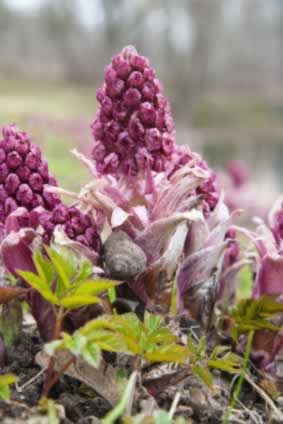
- Common Names
- Butterbur , Langwort, Umbrella Plan
- Botanical Name
- Petasites vulgaris
- Syn. P.officinalis
- Family
- ASTERACEAE
Medicinal Uses & Benefits of Butterbur
 How to Use|
Side Effects |
Plant & Garden|
How to Use|
Side Effects |
Plant & Garden|
- Medicinal Uses: * Asthma
* Cardiovascular
* Colds
* Headache/Migraine
- Properties: * Astringent * Cordial * Depurative * Diaphoretic * Diuretic
- Parts Used: root
- Constituents: pyrrolizidine type alkaloids, mainly senecionine and integerrimine; flavonoids, including quercetin, astragalan and isoquercitrin; petasin, neopetasin; tannins; mucilage; volatile oil; sesquiterpene
How to Use: Butterbur

Butterbur is used in Germany
to treat migraines.
What is butterbur? Butterbur root has been used traditionally since the Middle Ages, and in North America during colonial times as a heart stimulant, acting both as a cardiac tonic and also as a diuretic, to treat fevers, wheezing and colds. 1 Modern research supports the use of butterbur in treating the symptoms of seasonal rhinitis (allergies), and asthma. 2 Clinical trials done with a proprietary butterbur extract, Petadolex ®, proved an effective therapy in the prevention of migraines. 3
Preparation Methods & Dosage :Ethanolic (alcohol) or lipophilic (oil) extractions; Not recommended for use in teas or infusions.
Butterbur Side Effects: Butterbur contains pyrrolizidine alkaloids and its internal use is not recommended. There have been some reports of liver damage associated with the use of butterbur root extract. It should not be used by pregnant or nursing women. Not recommended for long term use.
Plant Description
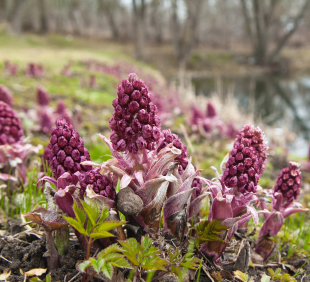
The Butterbur, a plant nearly allied to the Coltsfoot - being the Tussilago petasites of Linnaeus is found in wet ground and low lying marshy meadows. The name of the genus, Petasites, is derived from the Greek word for the felt hats worn by shepherds, like that of depictions of Mercury, in reference to the large leaves of the plant which block out light and air and prevent other plants from growing. 1
History and Traditions & Folklore
The name butterbur comes from the old use of the wrapping butter in the large leaves. Called plague flower in the old herbals, because of its value as a remedy in times of calamity. It is under the dominion of the Sun and therefore is a great strengthener of the heart, and cheers the vital spirits. The excellent Fuschius, in his account of this herb, is most express, and records its virtue as wonderful in pestilential fevers; and this he speaks not from tradition, but his own experience. Were it needful to prove the sun gives light, it is scarcely less certain or less obvious, than that this root, beyond all things else cures pestilential fevers, and is by long experience found to be very available against the plague, by provoking sweat; if the powder thereof, be taken in wine, it also resisteth the force of any other poison.
Nicholas Culpeper, 1653
 Works Cited
- Grieve, Maud Mrs. "A Modern Herbal" (1931)
- Danesch U. Petasites hybridus (Butterbur root) extract in the treatment of asthma - an open trial. Altern Med Rev. 2004;9(1):54-62. American Botanical Council
-
Butterbur Extract Effective in Migraine Prevention
American Botanical Council
The results of the trial concluded that the use of two 75 mg tablets per day of the proprietary butterbur extract Petadolex®(Weber & Weber International, Windmere, FL) in migraine patients helped to reduce the occurrence of migraines by an average of 48% during the four months of the trial.
Looking for Aroma Therapy? Visit Annies Aroma Therapy

Looking for something you can read offline? Join our mailing list and get a free copy of Methods for Using Herbs. This free handbook includes instructions on how to make basic herbal preparations at home. It covers making herbal teas, herb infused oils and balms, tinctures, and more.