


Tarragon Artemisia dracunculus
- Common Names
- Tarragon
- Botanical Name
- Artemisia dracunculus
- Family
- ASTERACEAE

Medicinal Uses & Benefits of Tarragon
 How to Use|
Side Effects |
Plant & Garden|
How to Use|
Side Effects |
Plant & Garden|
- Medicinal Uses: * Culinary/Kitchen
- Properties: * Antifungal * Antispasmodic * Aromatic * Carminative * Emmenagogue * Refrigerant
- Parts Used: leaves
- Constituents: phenylpropanoids methyl chavicol (also called estragole), anethol (10%), terpenes trans-b-ocimene (up to 22%), cis-b-ocimene (up to 15%) and y-terpineol, p-methoxy cinnamaldehyde , phellandrene, a- and b-pinene, camphene, limonene and eugenol
How to Use: Tarragon
Preparation Methods & Dosage :culinary seasoning, vinegar
Tarragon Remedies
 In the Kitchen: Makes an excellent vinegar, gives a spicy,sweet flavor to fish, eggs, cheese and sauces. In French cuisine, it is an integral part of fines herbes and dijon mustard.
Tarragon Side Effects: None noted
Plant Description
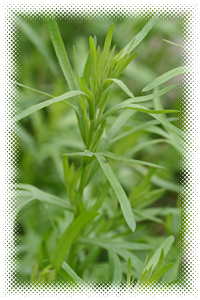
- Flowers:Small, pale yellow flowers, rarely fully open
- Plant Class:Perennial herb
- Leaves:Thin, bladelike and highly aromatic, similar to anise. Siver-green color, covered with fine, silky hairs.
- Root: Long fibrous root
- Preferred Habitat:Cultivated, warm dry soils
- Flowering Season:August
How to Grow Tarragon
Allow mature plants to dry out between waterings. Likes well drained soil in full sun. Pick leaves as needed, harvest the entire plant in the fall when the bottom leaves turn yellow. It is one of the few herbs that is not known to set seed, and propagation is by cuttings and root division. Topdress the garden beds to protect from frost during the winter. Bring a cutting indoors to have fresh leaves for use, dry tarragon loses much of it's flavor.
Related Species
Artemisia absinthium , Wormwood
Artemisia vulgaris, Mugwort
History and Traditions & Folklore
The English word "tarragon" originates from the French word estragon or "little dragon," which is derived from the Arabic tarkhun. Some believe the herb was given this name because of its supposed ability to cure the bites of venomous reptiles, while others believe the plant was so named because of its coiled, serpent-like roots. 2 The leaves, which are chiefly used, are heating and drying, and good for those who have the flux, or any preternatural discharge. It is a mild martial plant. An infusion of the young tops increases the urinary discharge, and gently promotes the menses
Nicholas Culpeper, 1653
 Works Cited
- W. T. Fernie ,M.D. 1897. "Herbal Simples Approved For Modern Uses Of Cure"
- Grieve, Maud Mrs. "A Modern Herbal" (1931)
Looking for Aroma Therapy? Visit Annies Aroma Therapy
Looking for something you can read offline? Join our mailing list and get a free copy of Methods for Using Herbs. This free handbook includes instructions on how to make basic herbal preparations at home. It covers making herbal teas, herb infused oils and balms, tinctures, and more.