


Gentian Gentiana lutea

- Common Names
- Gentian , wild gentian ,yellow gentian
- Botanical Name
- Gentiana lutea
- Family
- GENTIANACEAE

Medicinal Uses & Benefits of Gentian
Side Effects | Plant & Garden|
- Medicinal Uses: * Chinese
* Digestion
* IBS
* Liver
* Nausea
* Parasites/worms
* Stop Smoking
- Properties: * Antiparasite * Bitter * Carminative * Hepatic * Stomachic
- Parts Used: Dried root and rhizome
- Constituents: bitter glycosides (amarogentin, gentiopicrin, sweitiamarin), alkaloids (including gentianine and gentialutine), xanthones (including gentisein and gentisin), triterpenes, sugars, volatile oil
How to Use: Gentian
Gentian herb has been used in European and Eastern herbal medicine throughout the 3,000 years since its discovery to treat gallbladder problems and as a bitter tonic to improve digestion. Gentian root is used as one of the primary herbs to make the famous Swedish Bitters tonic. Bitter herbs such as gentian increase gastric secretions and promote digestion as well as add support for a sluggish liver. This speeds up the digestion of fat and protein, which increases the energy we get from food; many people report feeling less fatigued after continued use of bitters. Gentian is also useful for gastro-intestinal inflammation (one of its alkaloids, gentianine, has been shown to be anti-inflammatory). Gentian can also be used in formulas to treat parasitic infestations.
Preparation Methods & Dosage :

Gentian Remedies
Traditional Chinese Medicine
 In both Chinese and Korean, the terms for gentian can be translated literally as "dragon gallbladder herb." This attests to gentian's ability to treat fiery inflammations of the gallbladder that cause intense discomfort.
Gentian Side Effects: If you are pregnant or have high blood pressure or chronic gastrointestinal problems, you should use gentian only under the direction of a health-care professional. You should avoid gentian altogether if you have excess stomach acid. Children and adults over sixty-five should use low-strength preparations. You should not give gentian to a child under two years of age
Plant Description
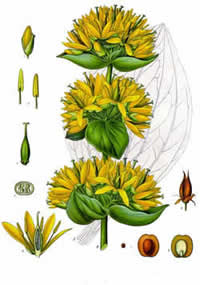
Koehler's Medicinal-Plants 1887
- Flowers:Clusters of big, five-petaled, orange-yellow flowers
- Plant Class:Herbaceous perennial
- Leaves:Stiff, pointy green leaves, alternating on a single stem
- Root: The roots are the medicinal part of the plant and take 7 to 10 growing seasons to mature
- Preferred Habitat:High mountain pastures,
- Flowering Season:
- Distribution:Alps and Himalayas, Spain and the Balkans - widely cultivated in China. The plant is now rare and protected in its native habitat.
Regional Traditions :European * Southeast Asia * Traditional Chinese Medicine *
How to Grow Gentian
Moist, acidic soil and part shade. Sow tiny seeds in fall for spring seedlings. Space 2 feet apart in garden. Flowers 3 to 4 feet tall.
G. purpurea, G. pannonica, G. punctata and G. acaulis are European gentians having similar medicinal properties to G. lutea and are used indiscriminately with each other and the official root, from which they differ but little in appearance, though are somewhat smaller.1
 Works Cited
Looking for Aroma Therapy? Visit Annies Aroma Therapy
Looking for something you can read offline? Join our mailing list and get a free copy of Methods for Using Herbs. This free handbook includes instructions on how to make basic herbal preparations at home. It covers making herbal teas, herb infused oils and balms, tinctures, and more.