


Linden Tilia spp
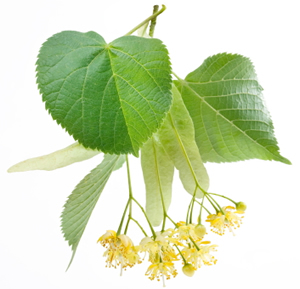
linden leaves with flowers
- Common Names
- Linden , Lime tree, Basswood
- Botanical Name
- Tilia spp
- Family
- TILIACEAE

Medicinal Uses & Benefits of Linden
 How to Use|
Side Effects |
Plant & Garden|
Folklore
How to Use|
Side Effects |
Plant & Garden|
Folklore
- Medicinal Uses: * Anxiety
* Cardiovascular
* Colds
* Herbal Teas
* Sore Throat
- Properties: * Cordial * Demulcent * Diaphoretic * Hypotensive * Nervine * Sedative
- Parts Used: The flowers, carefully dried in the shade.
- Constituents: alpha-pinene,ascorbic-acid,astragalin,beta-amyrin,beta-sitosterol,caffeic-acid,chlorogenic-acid,cysteine ,eugenol,geraniol,hesperidin ,isoquercitrin,limonene,linalyl-acetate,mucilage,nerolidol,p-coumaric-acid,phenylalanine,quercetin, quercitrin ,tannin,terpineol,tocopherol, vanillin
How to Use: Linden
The fragrant, yellowish flowers of the Linden tree have been used since the Middle Ages to promote perspiration to break fevers and as a gentle sedative to calm nervous anxiety and insomnia. Linden flower tea is better known in Europe than here in North America though Native Americans used linden for colds, fevers and nervous headaches - much the same purposes as modern herbalists do today. You will find linden often combined with yarrow flowers and sage in cold remedies. Linden is considered by many to be one of the best herbs to treat hypertension, second only to hawthorn, Crataegus spp.3
Preparation Methods & Dosage :Most often used as a tea, also taken in capsules and extracts. You will find linden often combined with yarrow flowers and sage in cold remedies. Linden flowers make a fragrant, relaxing addition to herbal baths.
Linden Remedies
Linden Side Effects: If you have heart problems, consult your doctor before using linden.
Plant Description

The American linden,or basswood, Tilia americana, is a large tree attaining a height of from 60 to 125 feet with a trunk diameter of 2 to 5 feet, with spreading branches. The somewhat leathery leaves are pointed at the apex, heart-shaped at the base, with sharply toothed margins and are borne on stems about 1 or 2 inches long. The flowers are produced in great abundance from May to June in drooping clusters composed of from 6 to 20 yellowish, very fragrant flowers. At the base of each cluster and grown to its stalk is a leaflike bract 2 to 4 inches in length. The roundish, grayish-green fruit is dry and woody and contains one or two seeds. 4
Regional Traditions :European * North America *
History and Traditions & Folklore
The fragrant, yellowish flowers have been used since the Middle Ages to promote perspiration and for nervous conditions. Tilia Europoea is found in the northern temperate zone of the Continent, and in France lime-flowers, carefully dried in the shade are used to make "Tilleul". The trees are generally called linden in North America, and lime in Britain. Neither the name nor the tree is in any way related to the citrus fruit called "lime" (Citrus aurantifolia). 1For pre-Christian Germans it was an object of worship since the lime-tree was associated with Freya, the guardian of life and goddess of fortune, love and truth. Therefore her tree was considered a tree of peace and it often formed the central meeting place of many villages and rural communities. Furthermore, legend has it that it cannot be struck by lightning since Freya is the wife of Wodan, the main god of the Germanic pantheon. 2
 Works Cited
- Wikipedia
- Claudia Muller-Ebeling, Wolf-Deieter Storl Witchcraft Medicine(1998)
- Hoffmann, David (2010-12-15). Medical Herbalism: The Science and Practice of Herbal Medicine (pp. 304). Healing Arts Press.
- Sievers, A.F. 1930.The Herb Hunters Guide. Misc. Publ. No. 77. USDA, Washington DC
Looking for Aroma Therapy? Visit Annies Aroma Therapy
Looking for something you can read offline? Join our mailing list and get a free copy of Methods for Using Herbs. This free handbook includes instructions on how to make basic herbal preparations at home. It covers making herbal teas, herb infused oils and balms, tinctures, and more.