

Nutmeg Myristica fragrans
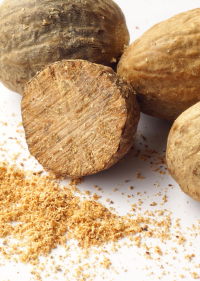
whole and grated nutmeg
- Common Names
- Nutmeg , Mace
- Botanical Name
- Myristica fragrans
- Family
- MYRISTICACEAE
Medicinal Uses & Benefits of Nutmeg
 How to Use|
Side Effects |
Plant & Garden|
Aromatherapy Oil |
How to Use|
Side Effects |
Plant & Garden|
Aromatherapy Oil |
- Medicinal Uses: * Aromatherapy
* Culinary/Kitchen
* Nerve/Back Pain
- Properties: * Abortifacient * Analgesic * Anodyne * Aromatic * Astringent * Calm * Digestive * Muscle Relaxant * Psychedelic * Stimulant
- Parts Used: essential oil, spice
- Constituents: sabinene,(50%) or camphene(50)%, d-pinene 20%,dipentene , d-linalool,d-borneol,i-terpineol,geraniol, myristcin, safrole,eugenol
How to Use: Nutmeg
Preparation Methods & Dosage :Nutmeg is used in powdered form in foods, also can be added to herbal teas and be taken as an extract. Nutmeg essential oil is used in aromatherapy.
Nutmeg Remedies
Nutmeg : Essential Oil Profile
Nutmeg has the characteristic aromatic, volatile, oily-spicy fragrance of whole nutmegs.
Nutmeg Side Effects: Nutmeg contains myristicin, a weak hallucinogen, though not at normal culinary levels. Still it is not recommended for dogs. Use of nutmeg as a recreational drug is not practical, and vastly overrated due to its unpleasant taste and its negative side effects (though this doesn't keep people from trying). Buy powdered nutmeg from a reputable source that guarantees that the powder is not made from previously BWP (broken-wormy-punky) nuts.
Plant Description
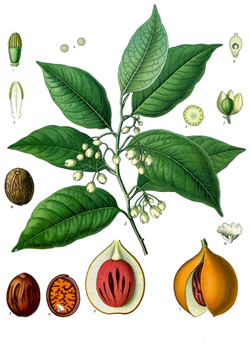
Koehler's Medicinal-Plants 1887
This tropical tree is found in the Moluccas, the Antilles, Sumatra, Java and India and grows to a height of 45 feet producing up to 2,000 nuts per year. The stone of the fruit is enclosed in a husk, when dried is known as mace.
 Works Cited
Looking for Aroma Therapy? Visit Annies Aroma Therapy
Looking for something you can read offline? Join our mailing list and get a free copy of Methods for Using Herbs. This free handbook includes instructions on how to make basic herbal preparations at home. It covers making herbal teas, herb infused oils and balms, tinctures, and more.