


Safflower Carthamus tinctorius
- Common Names
- Safflower Oil
- Botanical Name
- Carthamus tinctorius
- Family
- ASTERACEAE

Medicinal Uses & Benefits of Safflower Oil
 How to Use|
Side Effects |
Plant & Garden|
How to Use|
Side Effects |
Plant & Garden|
- Medicinal Uses: * Culinary/Kitchen
* Massage Oils
* Skin Care
- Properties: * Astringent
- Parts Used: oil
- Constituents: fatty acids: oleic- 78.71% palmitic- 4.85% linoleic- 12.44% linolenic- 0.08% stearic- 2.40%
How to Use: Safflower
Safflowers are the richest source of linoleic acid available in the commercial market. CLA (conjugated linoleic acid) cannot be made in the body, and must be supplemented in the diet. It is exceedingly difficult to obtain an optimal level of CLA through diet alone, leading many health experts to recommend it is supplement form. Safflower oil, and other CLA supplements are is to encourage the body to produce more lean body mass,and are commonly added in weight loss and body building supplements fat burners.
In addition to safflower oils use as a supplement, it is also used in cooking, salad dressings and other culinary applications. Exposure to heat and light will however, degrade some of safflowers healthful benefits and lessen its shelf life, although the oil is considered stable.
High-Oleic Safflower oil is produced from a natural mutation, discovered by researchers at the University of California at Davis. This oil contains high levels of oleic in instead of linoleic and has a substantially improved oxidative stability of normal safflower oil due to the replacement of the polyunsaturates with monounsaturates.1 High Oleic Safflower oil is of the most interest to health conscious consumers.
Safflower oil is used in skin care formulations that treat dry and damaged skin. Safflower oil is moisturized and soothing to skin.
Preparation Methods & Dosage :Safflower oil is used for both culinary and body care purposes. Safflower threads or petals can be used to make herbal tea.
Safflower Remedies
Plant Description

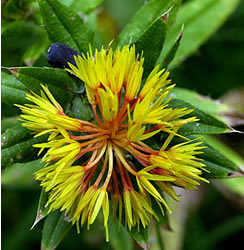
The Safflower plant, known in India as Koosumbha and in China as Hoang-tchi, is extensively cultivated in India, China and other parts of Asia, also in Egypt and Southern Europe; but its native country is unknown. It grows about 2 to 3 feet high, with a stiff, upright whitish stem, branching near the top; and has oval, spiny, sharp-pointed leaves, their bases half-clasping the stem. Its fruits are about the size of barleycorns, somewhat four-sided, white and shining, like little shells.
Regional Traditions :Middle East *
History and Traditions & Folklore
Safflower is one of the oldest crops known. For most of its history, the florets were used as the source of a dye, until more stable sources were developed. Interest in the health benefits of unsaturated oils to lower cholesterol levels brought about a new popularity of the ancient food source. Safflower has been used in many herbal traditions worldwide including Native American, TCM, and Ayurvedic medicine. Works Cited
- Fats and oils: formulating and processing for applications, Richard D. O'Brien - 2009

Looking for Aroma Therapy? Visit Annies Aroma Therapy
Looking for something you can read offline? Join our mailing list and get a free copy of Methods for Using Herbs. This free handbook includes instructions on how to make basic herbal preparations at home. It covers making herbal teas, herb infused oils and balms, tinctures, and more.