


Papaya Carica papaya
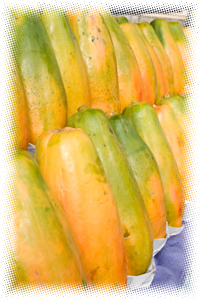
- Common Names
- Papaya , Papaw, Melon Tree, Papaya Vulgaris
- Botanical Name
- Carica papaya
- Family
- CUCURBITACEAE

Medicinal Uses & Benefits of Papaya
 How to Use|
Side Effects |
Plant & Garden|
How to Use|
Side Effects |
Plant & Garden|
- Medicinal Uses: * Athletes Foot/Ringworm
* Circulation
* IBS
* Parasites/worms
* South_American
- Properties: * Antioxidant * Antiparasite * Breath * Digestive * Diuretic * Vermifuge
- Parts Used: fruit,seeds
- Constituents: leaf: beta-carotene, calcium, carpaine, fats, flavonols, niacin, papain, tannins, and vitamin c. fruit: papain
How to Use: Papaya
Papaya fruit offers not only the luscious taste but is a rich source of antioxidant nutrients such as carotenes, vitamin C and flavonoids; the B vitamins, folate and pantothenic acid; and the minerals, potassium and magnesium; and fiber. Together, these nutrients promote the health of the cardiovascular system and also provide protection against colon cancer. The fruit is valued for its proteolytic enzymes including papain, which is used like bromelain, a similar enzyme found in pineapple, to treat sports injuries, other causes of trauma, and allergies. The milk like juice from unripe fruit called latex, contains the most concentration of papain, enough some people say to remove freckles.
Papaya leaf is used in herbal medicine to remove intestinal worms. Papaya leaf has less of the protein-dissolving papain than the fruit, so it is less likely to "dissolve" the worms, but it contains tannins that the fruit does not. These tannins protect the intestine from reinfection by "tanning" proteins in the lining of the intestinal wall so that worms cannot attach themselves. 1
Preparation Methods & Dosage :Papaya is an edible fruit, and the leaf can be brewed as a tea. Often taken in extract and capsule form.
Papaya Side Effects: Not for long term use - can have a strong laxative effect. The papaya fruit, seeds, latex, and leaves contain carpaine, an anthelmintic (antiparasitic) alkaloid which could be dangerous in high doses.
Plant Description
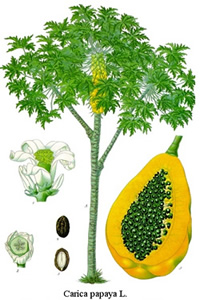
Koehler's Medicinal-Plants 1887
Native to Central and South America, papaya is a yellowish orange fruit that makes great juices, jellies and preserves. The fresh leaves are used as a substitute for soap and as a dressing for wounds.
Regional Traditions :Central and South America *
Related Species North American pawpaw is a different species, in the genus Asimina.
 Works Cited
Looking for Aroma Therapy? Visit Annies Aroma Therapy

Looking for something you can read offline? Join our mailing list and get a free copy of Methods for Using Herbs. This free handbook includes instructions on how to make basic herbal preparations at home. It covers making herbal teas, herb infused oils and balms, tinctures, and more.