


Cumin Cuminum cyminum
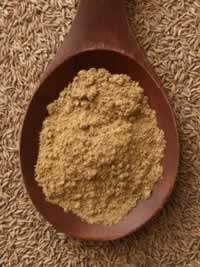
Cumin seed
- Common Names
- Cumin , cummin
- Botanical Name
- Cuminum cyminum
- Family
- APIACEAE

Medicinal Uses & Benefits of Cumin
 How to Use|
Side Effects |
Plant & Garden|
Folklore
How to Use|
Side Effects |
Plant & Garden|
Folklore
- Medicinal Uses: * Ayurvedic
* Culinary/Kitchen
* Digestion
- Properties: * Anti-inflammatory * Antispasmodic * Aromatic * Carminative * Digestive * Diuretic * Emmenagogue
- Parts Used: Seeds
- Constituents: essential oil: cuminaldehyde- toasted cumin: substituted pyrazines, 2-ethoxy-3-isopropylpyrazine, 2-methoxy-3-sec-butylpyrazine, and 2-methoxy-3-methylpyrazine
How to Use: Cumin
Along with being one of the worlds most popular cooking spices, cumin has an ancient history of use as a medicinal plant. In traditional herbal medicine cumin is used as a diuretic and to treat stomach upset and flatulence. 1 In South Asia, cumin tea (dry seeds boiled in hot water) is used to distinguish false-labours (due to gas) from real labor. In Sri Lanka, toasting cumin seeds and then boiling them in water makes a tea used to soothe acute stomach problems. Cumin seeds are also being studied for their anti-carcinogenic properties.2
Preparation Methods & Dosage :Cumin is a major component of curry and chili powders, the seeds may be toasted or used fresh, and added to teas.
Cumin Remedies
 In the Kitchen:
Cumin is used worldwide in cooking especially in the Middle East, India, and Mexico where it was introduced by the Spanish. It's popularity in the US rose with the increased interest in Mexican food and other ethnic dishes. Cumin is aromatic, containing up to 4 percent essential oil, warm, spicy and slightly sweet.
Ayurvedic Medicine
 A decoction of cumin, jaljari can be taken as a cooling drink in the summer. It is considered a good antidote to pungent foods like tomatoes and chilies, and is often included in recipes that are heavy on pungent tastes.
Cumin Side Effects: GRAS - The oil may have photosensitizing effects
Plant Description
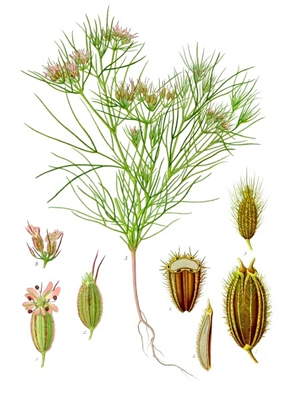
From Koehler's Medicinal-Plants 1887
- Flowers:small, rose-coloured or white, in stalked umbels
- Plant Class:Flowering annual- 1-2 feet tall
- Leaves: The leaves are divided into long, narrow segments like Fennel, but much smaller and are of a deep green colour, generally turned back at the ends
- Fruit: Seeds, yellow-brown, resemble caraway
- Preferred Habitat:Hot, arid climate
- Flowering Season:June, July
- Distribution:Asia, India, Mediterranean
Regional Traditions :Ayurvedic * Middle East *
Related Species Do not confuse cumin with sweet cumin, which is a common name for anise (Pimpinella anisum). Black cumin, or black seed oil (Nigella sativa) is not botanically related to cumin.
History and Traditions & Folklore
Cumin is mentioned in Isaiah xxvii. 25 and 27, and Matthew xxiii. 23, and in the works of Hippocrates and Dioscorides. From Pliny we learn that the ancients took the ground seed medicinally with bread, water or wine, and that it was accounted the best of condiments.3During the Middle Ages it was believed that cumin kept chickens and lovers from wandering. It was also believed that a happy life awaited the bride and groom who carried cumin seed throughout the wedding ceremony. 2
 Works Cited
Looking for Aroma Therapy? Visit Annies Aroma Therapy
Looking for something you can read offline? Join our mailing list and get a free copy of Methods for Using Herbs. This free handbook includes instructions on how to make basic herbal preparations at home. It covers making herbal teas, herb infused oils and balms, tinctures, and more.