


Chicory Cichorium intybus
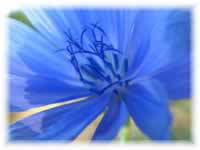
closeup of a chicory flower
- Common Names
- Chicory root , Succory, Blue Sailors
- Botanical Name
- Cichorium intybus
- Family
- ASTERACEAE

Medicinal Uses & Benefits of Chicory Root
 How to Use|
Side Effects |
Plant & Garden|
How to Use|
Side Effects |
Plant & Garden|
- Medicinal Uses: * Cardiovascular
* Detoxification
* Gout
* Liver
- Properties: * Anti-inflammatory * Cholagogue * Depurative * Diuretic * Hepatic * Laxative * Refrigerant
- Parts Used: root, leaves
- Constituents: root: inulin, bitters, cichoriin, taraxasterol, tannins, sugars, pectin, fixed oils. leaves: inulin, frutos, resin, chicoriin, esculetin
How to Use: Chicory

Chicory flavored coffees are popular
in New Orleans
The dark, rich flavor of chicory is best known as a southern substitute for coffee, but herbalists value chicory as a bitter digestive tonic. Drinking chicory on a regular basis helps to rid your system of excess water and uric acid buildup without depleting potassium and other minerals, helping to support the liver and the heart. This also makes chicory a good beverage for those with rheumatism and gout. In this respect it mirrors and complements the properties of dandelion, with which it is often combined. 93 Chicory has a long standing reputation as a medicinal herb, M. Grieve recommended it in her 1931 Modern Herbal
“Chicory be taken freely in cases of gout, jaundice and rheumatic complaints.” 91
Chicory is also a good source of inulin, a prebiotic important to the immune system and other compounds that are anti-inflammatory and antibacterial. 63
Preparation Methods & Dosage :Chicory is always prepared as a decoction, just like coffee. Combines well with coffee, burdock and dandelion root
Chicory Remedies
Chicory Side Effects: Avoid excessive consumption if you have gallstones
Plant Description

- Flowers:Bright, deep azure to gray blue, rarely pinkish or white, 1 to 1 1/2 in. broad, set close to stem, often in small clusters for nearly the entire length; each head a composite of ray flowers only, 5-toothed at upper edge, and set in a flat green receptacle.
- Stem:Rigid, branching, 1 to 3 ft. high
- Leaves:Lower ones spreading on ground, 3 to 6 in. long, spatulate, with deeply cut or irregular edges, narrowed into petioles, from a deep tap-root; upper leaves of stem and branches minute, bract like.
- Fruit:
- Preferred Habitat:Roadsides, waste places, fields.
- Flowering Season:July - October
- Distribution: Common in eastern United States and Canada, south to the Carolinas, also sparingly westward to Nebraska.
Regional Traditions :North America *
How to Grow Chicory
Chicory was introduced to the United States and southern Canada from Europe and will grow almost anywhere. Chicory's bright, deep blue flowers make it an attractive garden plant even if you don't grow enough to harvest the long taproot that is roasted and used in herbal beverages.
History and Traditions & Folklore
From the depth to which the tap-root penetrates, it is not unlikely the succory derived its name from the Latin succurrere to run under. The Arabic name chicourey testifies to the almost universal influence of Arabian physicians and writers in Europe after the Conquest. Netje Blanchan Wild Flowers worth Knowing(1917)
The chicory plant is one of the earliest cited in recorded literature. Horace(65 BC - Rome) mentions it in reference to his own diet, which he describes as very simple: "Me pascunt olivae, me cichorea, me malvae" ("As for me, olives, endives, and mallows provide sustenance") Wikipedia
 Works Cited
Looking for Aroma Therapy? Visit Annies Aroma Therapy

Looking for something you can read offline? Join our mailing list and get a free copy of Methods for Using Herbs. This free handbook includes instructions on how to make basic herbal preparations at home. It covers making herbal teas, herb infused oils and balms, tinctures, and more.