

Horse Chestnut Aesculus hippocastanum

- Common Names
- Horse Chestnut , Buckeye
- Botanical Name
- Aesculus hippocastanum
- Family
- Hippocastanaceae
Medicinal Uses & Benefits of Horse Chestnut
 How to Use|
Side Effects |
Plant & Garden|
How to Use|
Side Effects |
Plant & Garden|
- Medicinal Uses: * Beauty
* Bruises/sprains
* Cellulite
* Diarrhea
* Varicose Veins
- Properties: * Analgesic * Astringent * Circulation * Febrifuge * Skin tonic
- Parts Used: Bark, seed, leaf
- Constituents: saponins (including aescine), flavonoids, coumarins, tannins
How to Use: Horse Chestnut
Horse chestnut is valued in herbal medicine for it's support of the circulatory system. The herb is anti-inflammatory which decreases swelling and astringent which reduces bleeding and adds tone to connective tissue. Much of the medicinal value of horse chestnut is attributed to the phytochemical aescin, which has a stabilizing action on veins and capillaries. This strengthening of veins improves circulation to areas of cellulite and heals bruising. Balch Aescin also "firms up" varicose veins (including hemorrhoids) by increasing the tone of the muscle layers underlying them. White Look for creams containing horse chestnut as a defense against wrinkles and in body lotions to help reduce cellulite. Horse chestnut can be combined with other herbs to treat chronic coughs with congestion.
Preparation Methods & Dosage :Traditionally the leaves and bark are used as a tea; also used to make tinctures, creams, and infusions. The whole nut is preferable when it is to be used for external applications. The most potent form of the herb is an extract of its active constituent, aescin.
Horse Chestnut Remedies
Horse Chestnut Side Effects: Mild stomach upset may occur with the very first dose. It usually goes away and does not recur. It is recommended to be administered by a qualified practitioner. Not recommended while pregnant. This herb should be avoided by anyone with liver or kidney disease.
Plant Description
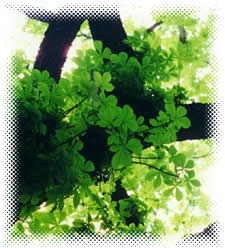
Horse Chestnut tree
- Flowers:Clusters of pink and white flowers
- Plant Class:Tree, height up to 80 ft
- Etymology: From the Latin esca - food, and hippos -horse. The epithet "horse" refers to the size and coarseness of this species as compared with the Sweet Spanish Chestnut. In the same way we talk of the horse radish, the horse daisy, and the horse leech. Alternate sources explain that in Turkey, where the species originated, the fruit was given to horses touched or broken in the wind. 3
- Leaves: leaves in clusters of 5 to 7 leaflets
- Fruit: Spiny green fruit, contains up to 3 shiny brown seeds.
- Preferred Habitat:The tree is chiefly grown for ornamental purposes, in towns and private gardens and in parks, and along streets.
- Flowering Season:
- Distribution:Native to central Asia, naturalized in western Europe and the United States. The horse chestnut is not related to the edible chestnut, an entirely different plant. The bitter seeds contain saponins (beta-aescine) and the flavonoid glycosids and are inedible without removing these components. This can be done either by soaking in water (lime water) or by leaching with alcohol or acetone in a large scale. Debittered, dried and ground seeds are a good feeding for horses and cattle. 4
Regional Traditions :European *
 Works Cited
-
Bell, Stacey; Balch, CNC, Phyllis A. (2012-04-03). Prescription for Herbal Healing, 2nd Edition: An Easy-to-Use A-to-Z Reference to Hundreds of Common Disorders and Their Herbal Remedies (p. 87). Penguin Group. Kindle Edition.
Horse chestnut was approved by the German Commission E for pathological conditions of the veins of the legs (chronic venous insufficiency), for example, pains and heaviness in the legs, cramps in the calves during the night, and leg swelling.
- White, Linda B., M.D. "The Herbal Drugstore" (2003)
- W. T. Fernie ,M.D. (1897). Herbal Simples Approved For Modern Uses Of Cure - W. T. Fernie ,M.D. (Kindle Locations 1388-1389). Unknown. Kindle Edition.
- Hanelt, P., ed. 2001. Mansfeld's encyclopedia of agricultural and horticultural crops. Volumes 1-6. (Mansf Ency)
Looking for Aroma Therapy? Visit Annies Aroma Therapy
Looking for something you can read offline? Join our mailing list and get a free copy of Methods for Using Herbs. This free handbook includes instructions on how to make basic herbal preparations at home. It covers making herbal teas, herb infused oils and balms, tinctures, and more.